
NeuroGlass and Neuroglancer
NeuroGlass is the workspace Neuroglancer never had. We build on the engine rather than replace it, and we co-maintain it.
open source
Contributing back to the Neuroglancer community
MetaCell, the company behind NeuroGlass, co-maintains Neuroglancer. We contribute our improvements back to the open-source project, so everyone benefits — like Red Hat for Linux. NeuroGlass wouldn't exist without Neuroglancer and its community.
NeuroGlass is built around Neuroglancer — we wrap the engine, we don't replace it. Your work stays portable: annotations, schema and state remain standard Neuroglancer JSON that opens in plain Neuroglancer. No proprietary formats, no lock-in.
See the open-source libraries we use
NeuroGlass is built around Neuroglancer — we wrap the engine, we don't replace it. Your work stays portable: annotations, schema and state remain standard Neuroglancer JSON that opens in plain Neuroglancer. No proprietary formats, no lock-in.

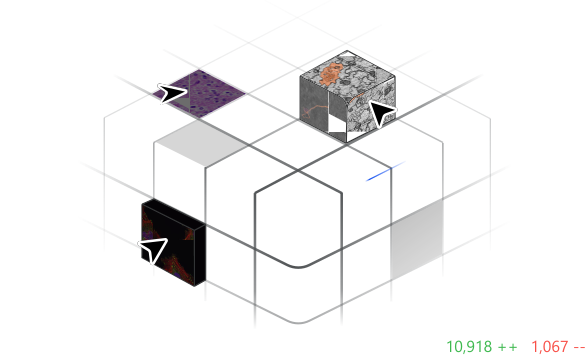
engine and workspace
What Neuroglancer does, and what NeuroGlass adds
Neuroglancer renders the data. NeuroGlass is where your team organizes it, works on it together and shares the results.
Neuroglancer: the viewer engine
Streams and renders very large volumes in the browser, at every resolution
Image, segmentation, mesh, skeleton and annotation layers, in 2D slices and 3D
Per-layer shaders for color, contrast and rendering
The whole view kept as one shareable JSON state
Reads OME-Zarr, N5, Neuroglancer Precomputed and more
NeuroGlass: the workspace around it
Studies and Data Collections to organize datasets with their metadata
Glances: saved views you and your team can reopen exactly
Figures: share an exact interactive view with a link
Spatial comments with @mentions and threads, on the data itself
Single sign-on and per-person or per-team permissions
Search across Studies, including inside saved viewer states
Streaming from your private buckets, on our cloud, your cloud or on-prem


